Luxury Condo Interior Design in Phuket: What Works in a Tropical Climate
Luxury condo interior design in Phuket is less about expensive objects and more about how a home handles light, heat, rain and humidity while still feeling calm. The interiors that age well here use light palettes, materials that cope with moisture, an easy link to the balcony, generous storage and layered lighting.
This guide explains each choice in practical terms for buyers who plan to live in, holiday in or rent out a condo. At the end, we show how the design language of Ever Prime Residences in Karon reflects the same ideas.
What Defines Luxury Condo Interior Design in Phuket?
In Phuket, the test of luxury is practical. A home has to stay fresh through the wet months, feel cool on bright afternoons and look good after a season of guests.
A useful definition has four parts:
Comfort first. Rooms feel cool, bright and quiet without constant effort.
Low maintenance. Surfaces are easy to wipe down and slow to show wear.
Connection to the view. The interior leads the eye out to the balcony and the landscape.
Flexibility. The same layout works for a long stay, a two-week holiday or a rental guest.
Phuket’s climate shapes every interior decision. According to the Thai Meteorological Department, the island’s 30-year average rainfall is 2,271.5 mm a year, with September the wettest month and December to March the four driest. The southwest monsoon usually brings cloudy, rainy weather between mid-May and mid-October.
For interiors, moisture control matters as much as style. The US Environmental Protection Agency puts it simply: “the key to mold control is moisture control”. It recommends keeping indoor humidity below 60 percent where possible, using air conditioners or dehumidifiers when needed, and running bathroom and kitchen extraction while showering and cooking. Its guide to mold and moisture at home is a useful checklist.
In practice, good tropical design makes this easy:
Bathrooms and kitchens with extractor fans that you actually use.
Air-conditioning that reaches every room, including walk-in wardrobes.
A routine for empty months, such as airing the home or running a dehumidifier.
Condensation on windows or mirrors is an early warning sign of high humidity. Treat it as a cue to ventilate, not as a cosmetic issue.
Light Palettes and Calm Colour
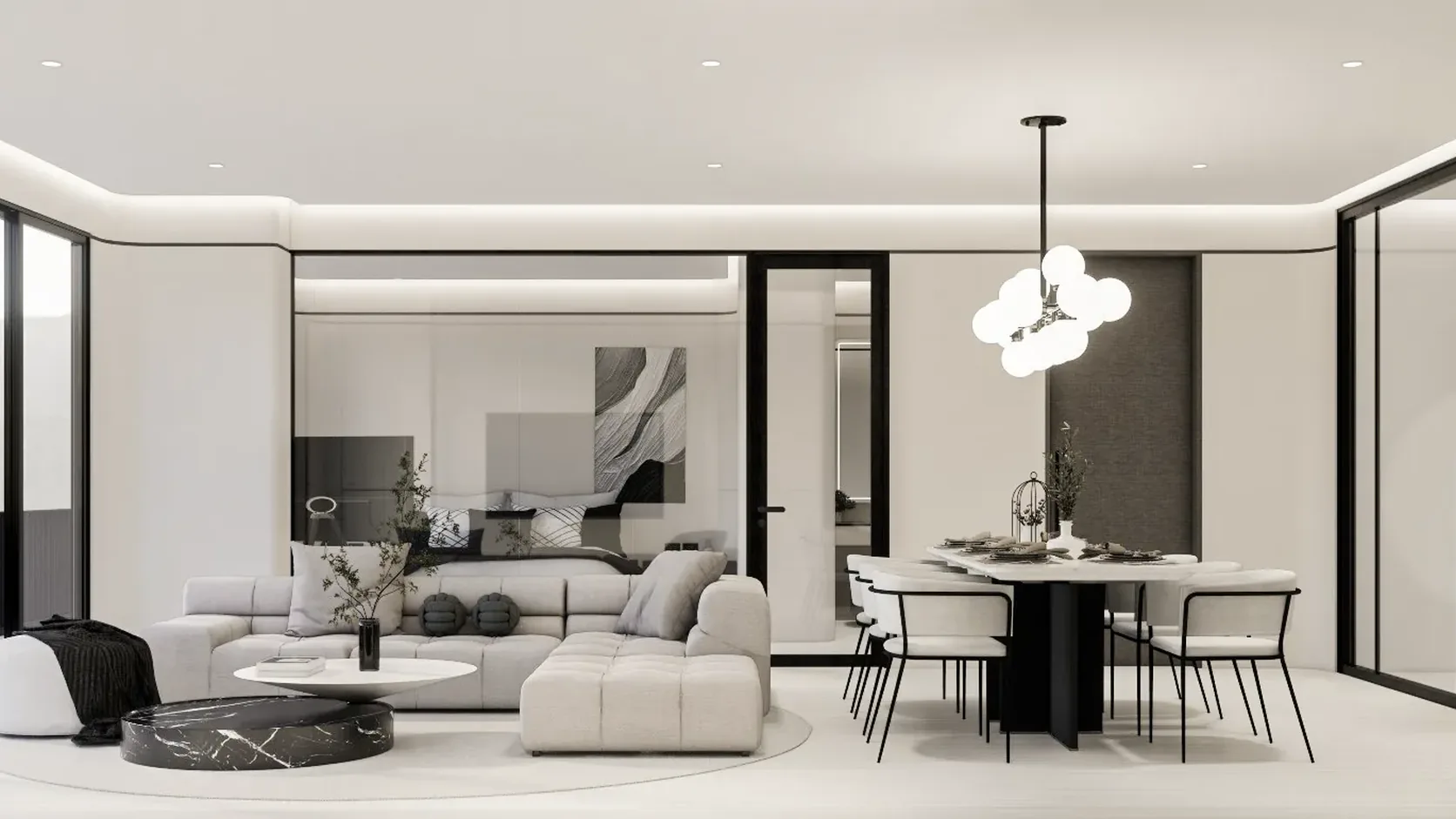
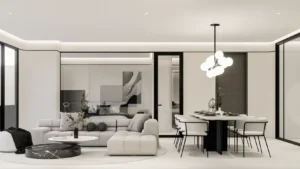
White, off-white and soft stone tones are popular in Phuket for good reasons. Pale surfaces reflect daylight deeper into the room, make a compact apartment feel more open and let the view take centre stage.
A light palette does not have to feel sterile. Add contrast in small, deliberate doses:
one darker tone, such as slate, charcoal or bronze, for joinery, frames or lamp bases;
texture in linen, bouclé-style upholstery or woven rugs;
a few plants or one piece of art rather than many small objects.
Keep large areas of dark fabric away from strong sun, because they fade and absorb heat. Save them for cushions and throws that are easy to replace.
Materials and Finishes for a Humid Climate
This section is general guidance, not a specification for any project. Ask for the actual finishes list before you buy or furnish.
Floors. Porcelain or stone-look tiles and well-sealed stone are easy to clean and cope with damp. If you want wood, ask how the product behaves in humidity.
Joinery. Built-in wardrobes and kitchen cabinets should have moisture-resistant boards and sealed edges. Ventilated doors or a small gap at the top and bottom help air circulate inside.
Fabrics. Choose performance or outdoor-grade fabrics with removable, washable covers, especially if guests will use the home.
Metal and hardware. Near the sea, salty air is hard on cheap fittings. Look for good-quality handles, hinges and balcony furniture frames, and check them every season.
Bathrooms. Large-format tiles mean fewer grout lines, and good sealing keeps water out from behind finishes.
Indoor–Outdoor Living and the Balcony
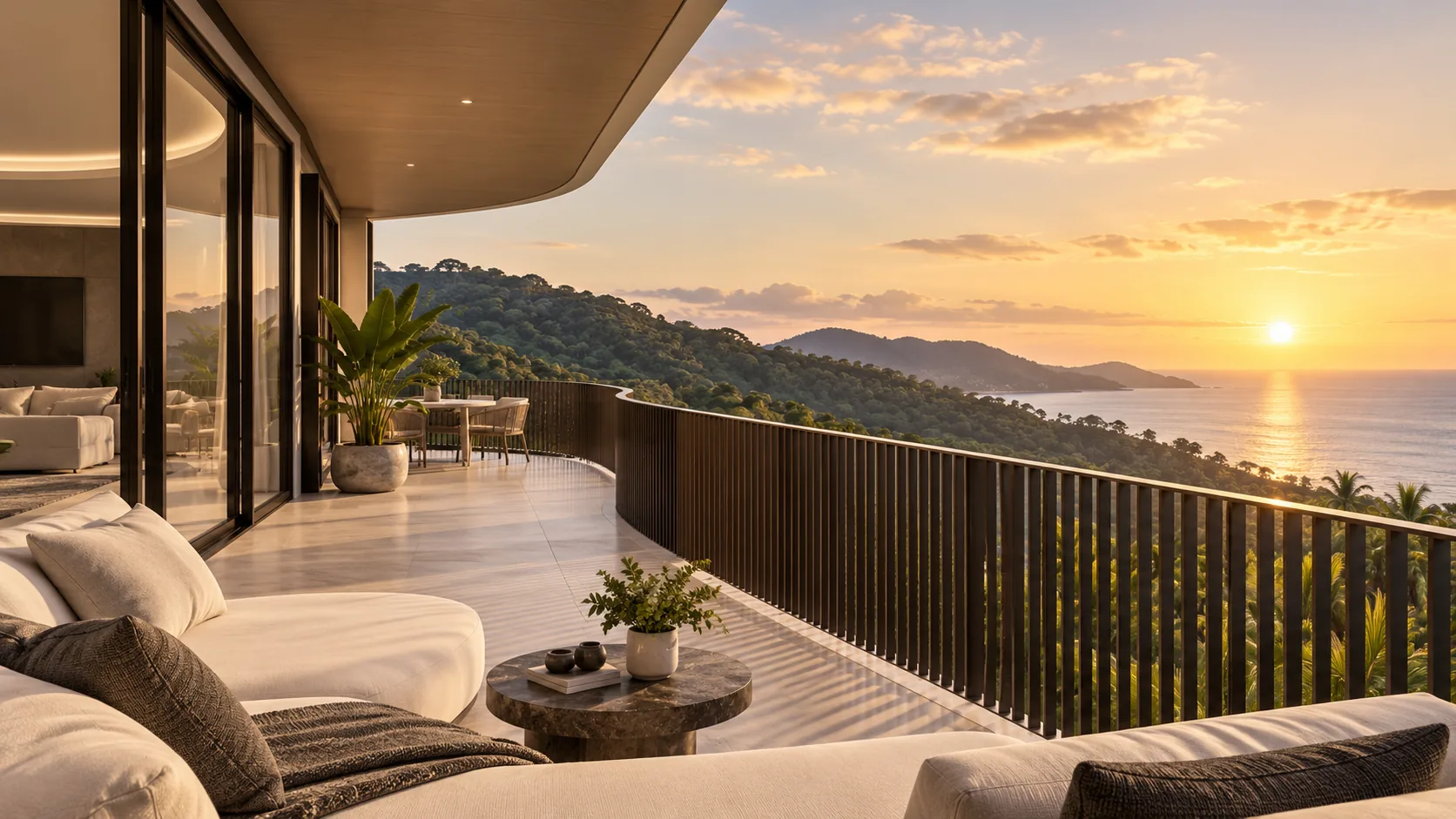
In Phuket, the balcony is part of the living space, not an extra.
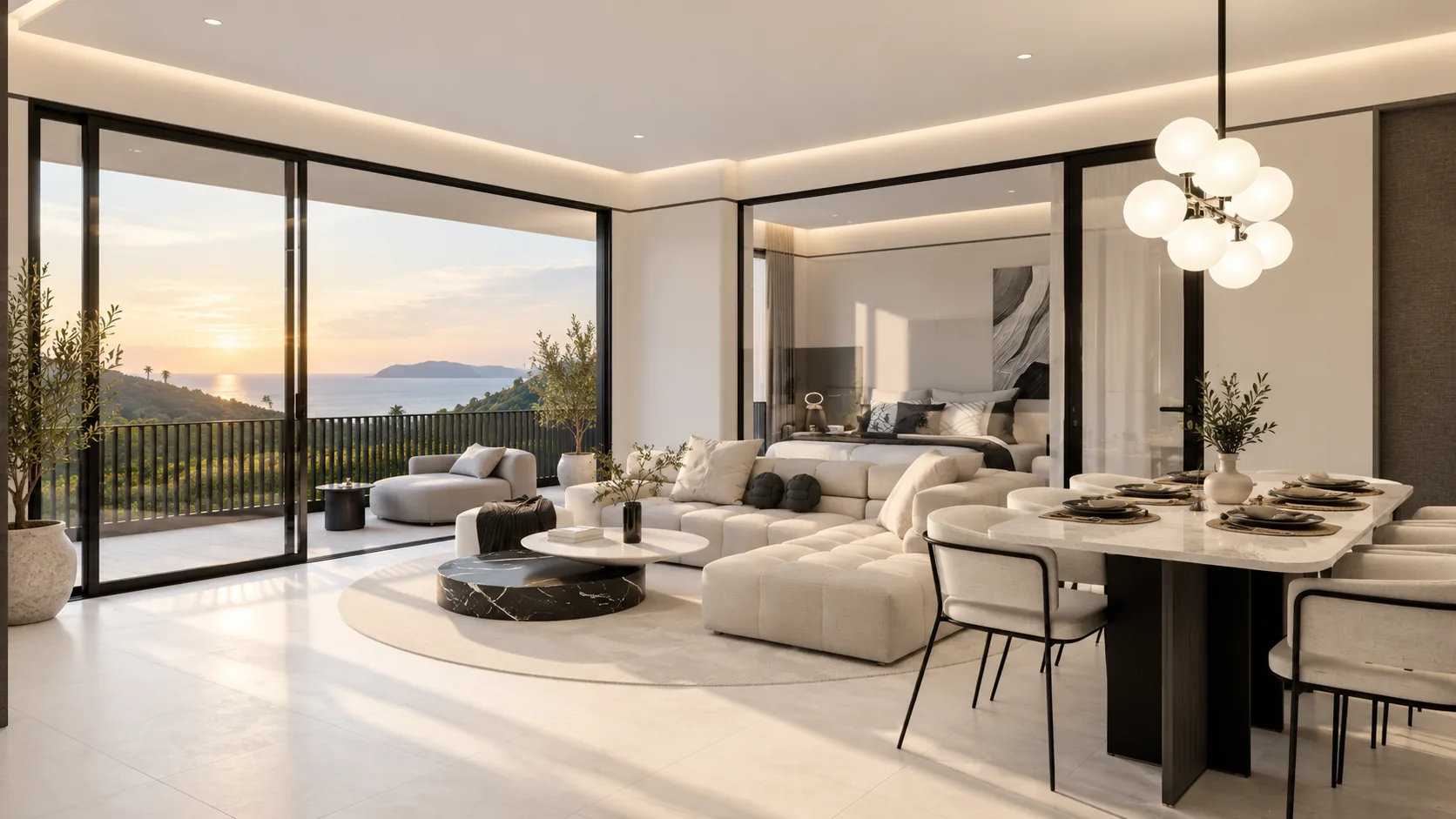
Line of sight. Arrange the sofa or bed so the first thing you see is the view, not the TV.
Matching tones. Use a floor and furniture palette on the balcony that echoes the inside, so the two spaces read as one.
Weather-ready furniture. Pick pieces that can stay outside in rain, with cushions you can bring in or store.
Shade and privacy. A large plant, an outdoor rug and a simple shade solution make the balcony usable at midday.
Low-level lighting. Soft, low lights keep night views clear.
If the view is a major reason you are buying, our guide to sea-view condos in Karon covers what to check before you choose a unit.
Layouts for Living, Holidays and Rental Use
Many buyers use a Phuket condo in more than one way. A design that serves them all starts with the layout:
Open-plan living and kitchen. One connected space feels larger and lets the cook stay part of the conversation.
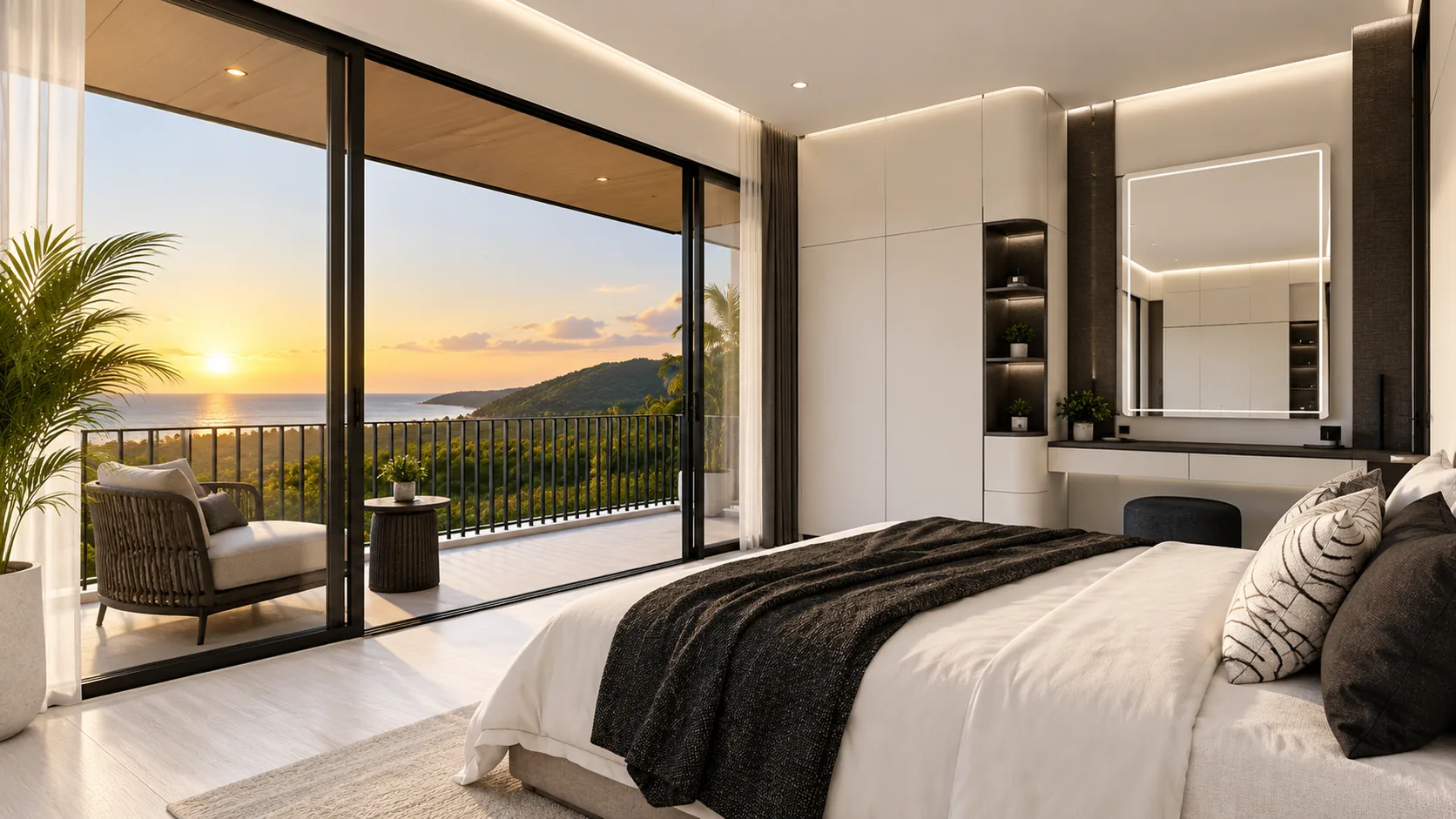
Bedroom close to the balcony. Waking up to daylight and the view is a large part of the appeal.
Clear zones in a compact unit. A kitchen counter, a sliding partition or a rug can mark out living and dining without walls.
A guest-ready finish. If you may rent the home, choose durable furniture, neutral bedding and simple decor that is easy to reset between stays.
Rental use depends on the building rules and the law, so confirm any rental plan with the developer and a qualified adviser. Our Phuket condo investor guide lists the questions to ask.
Storage, Lighting and the Details Guests Notice
Storage. Built-in wardrobes keep floors clear, and clear floors make a room feel calm. Plan space for luggage, beach gear and cleaning equipment. If you rent the home, a lockable owner’s cupboard keeps personal items separate.
Lighting. One central ceiling light rarely flatters a room. Layer your lighting instead:
concealed cove lighting for soft background light;
task lighting over the kitchen counter, desk and dressing table;
warm-white bedside and floor lamps for the evening;
dimmers, so the same room works for breakfast and for a late dinner.
Small details. Blackout curtains, quiet air-conditioning and enough sockets beside the bed matter more than a feature wall.
How Ever Prime Residences Reflects These Ideas
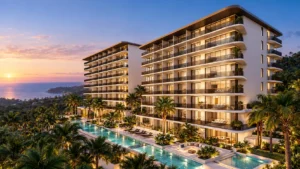
Ever Prime Residences is a low-rise condominium in Karon with four buildings of eight floors. According to the developer’s brochure, the residences are designed with modern aesthetics: sleek curves, a white and off-white palette with slate-toned accents, and a spacious al fresco balcony.
The developer’s computer-generated interior images show the same direction. They feature light-coloured floors, white and off-white built-in joinery with rounded edges, dark textured accent panels, concealed ceiling lighting and tall glazed sliding doors to the balcony. They illustrate a design direction, not a specification of finishes or furniture.
Unit types cover a range of lifestyles, with approximate starting areas from the brochure:
1 bedroom: 32.89–44.84 sq.m.
2 bedroom: 46.53–60.09 sq.m.
4 bedroom: 176.35 sq.m.
Several planned facilities support the same practical approach to living. The brochure lists a storage room service, a fitness centre and yoga space, a business hub and co-working space, a library, a wellness lounge, and a 24-hour supermarket and coffee shop on site.
What finishes are included, and is there a written specification?
Is any furniture or appliance package offered, and what exactly does it include?
Where are the air-conditioning units, and does every room have one?
Do the bathroom and kitchen have mechanical extraction?
What storage is included, and is extra storage available in the building?
What do the building rules say about short stays and renovation work?
Frequently Asked Questions
What colours work best in a Phuket condo?
Light, neutral bases such as white, off-white and soft stone reflect daylight and keep the focus on the view. Add one darker accent tone and natural textures for warmth.
How do I prevent mould in a condo in Phuket?
Control moisture. The US EPA recommends keeping indoor humidity below 60 percent where possible, using air-conditioning or a dehumidifier when needed, and running extractor fans while showering and cooking. Plan for empty months too.
Is wood a good choice for floors in a tropical climate?
It can be, but ask how the specific product behaves in humidity. Porcelain or stone-look tiles, engineered boards and wood-look tiles are common low-maintenance alternatives.
Should I furnish my condo for rental guests or for myself?
Many owners do both. Choose a calm, durable base and add personal pieces you can store when guests stay. Check the building rules before planning rental use.
What design style does Ever Prime Residences use?
The developer’s brochure describes modern aesthetics with sleek curves, a white and off-white palette, slate-toned accents and a spacious al fresco balcony.
Final Takeaway
Good luxury condo interior design in Phuket is quiet, bright and practical. Start with moisture control and the view, keep the palette light, choose easy-care materials, and invest in storage and lighting before decoration.
All project specifications, facilities and distances are taken from the developer’s brochure and are subject to change without notice. Design advice in this article is general guidance only; check the actual specification of any unit before you buy or furnish.
Image note: Images in this article are AI-assisted illustrations, including visuals based on Ever Prime Residences computer-generated renderings. They are not photographs of the completed project.
Luxury condo interior design in Phuket: light palettes, humidity-aware materials, balconies, storage and lighting, and how Ever Prime's design reflects...