Property for Sale in Thailand: Who Is Buying in Phuket in 2026?
Who buys property for sale in Thailand and Phuket in 2026? REIC data on foreign condo buyers by nationality, what...
Read More →


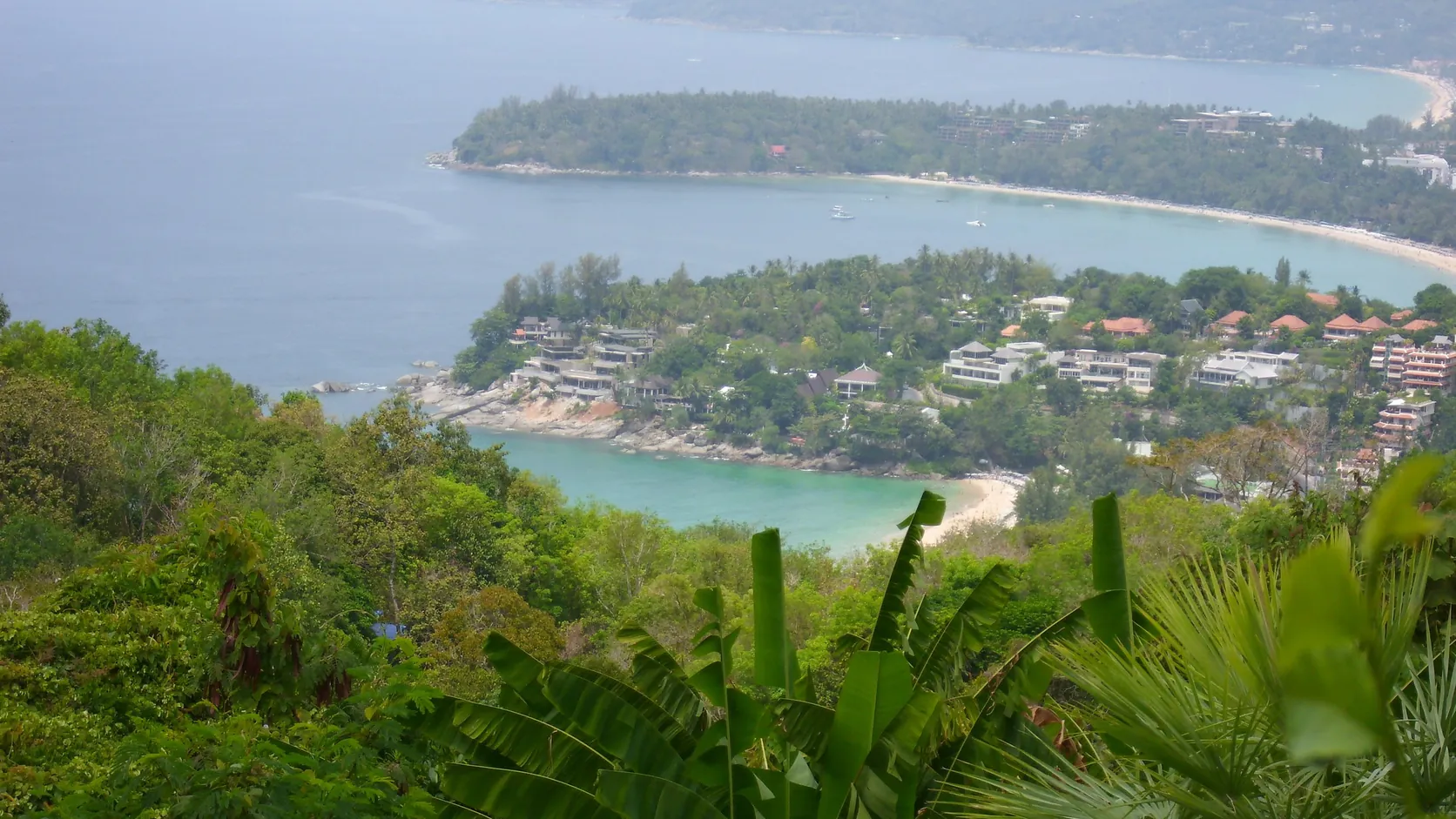
View from the Karon Viewpoint. Photo by ADwarf, public domain, via Wikimedia Commons, cropped.
Living in Phuket means warm weather in every month, an international airport on the island and private hospitals with 24-hour emergency departments. On the other side, the rainy season runs from mid-May to mid-October, the UK government warns about road accidents, and Karon’s open bay can have serious undertows from May to October.
We look at both sides from Karon, on the island’s west coast, where Ever Prime Residences is planned.
| Topic | Pro | Con |
|---|---|---|
| Climate | Warm all year | Humid, with a long rainy season |
| Healthcare | Private hospital with a 24-hour emergency department | Hospitals require a guarantee of payment |
| Travel | International and domestic flights on the island | One Smart Bus route serves Karon |
| Roads | Ride-hailing apps cover Phuket | A high number of road accidents, especially with motorcycles |
| Sea | Kata Beach 0.9 km from Ever Prime, per the brochure | Undertows and jellyfish from May to October |
The Thai Meteorological Department’s Phuket station records a mean temperature of 28.5 °C across the year, based on 1991–2020 data. Even the month with the lowest average minimum, October, has an average daily low of 24.9 °C. For anyone moving from northern Europe, that means no heating bills and outdoor life all year.
It is humid, though. Mean relative humidity is 77% across the year and reaches 82% in October. The station’s mean annual rainfall is 2,271.5 mm, with September the wettest month and February the driest.
The TMD dates the rainy season from mid-May to mid-October, although the start and end vary from year to year. Our Phuket rainy season by month guide has the monthly figures.
Vachira Phuket Hospital, in Mueang Phuket, is a 650-bed public tertiary hospital under the Ministry of Public Health. Bangkok Hospital Phuket is a private hospital whose emergency department is open 24 hours a day, 365 days a year.
From Ever Prime Residences, the developer’s brochure lists a medical clinic 0.2 km away, Chalong Hospital 6.0 km away and Bangkok Hospital Phuket 18.3 km away.
The UK government’s travel advice says private hospitals in Thailand are “of a high standard but can be expensive”, and that all hospitals require a guarantee of payment before treatment. Insurance you can keep as you age is part of the decision to live here. Save 1669, Thailand’s emergency medical number, in every family phone.
Mosquitoes need attention too. TravelHealthPro, the UK’s travel health service, says there is a risk of dengue in Thailand and advises avoiding mosquito bites, particularly in the daytime.
Our guide to retiring in Karon covers healthcare planning for older residents.
Phuket International Airport is the only airport on the island that handles both domestic and international flights. It has separate international and domestic terminals and operates 24 hours. Which cities you can reach directly depends on the airlines’ current schedules.
The airport is at Mai Khao in Thalang District. Our Karon to Phuket Airport guide covers transfers from Karon.
Phuket runs on Thai Standard Time, UTC+7. If you work remotely for clients in another time zone, check your meeting hours before you commit.
Families living in Phuket can choose from several international schools, but expect a school run. The developer’s brochure lists seven international schools near the project. ISP International School Phuket is 0.6 km away; the other six are between 8.2 km and 17.8 km away.
British International School Phuket offers the National Curriculum of England, IGCSE and the IB Diploma, while HeadStart International School Phuket follows the English National Curriculum across two campuses. Ask each school about places, fees and buses before choosing where to live.
Our guide to living in Karon with family lists the schools and hospitals near Karon.
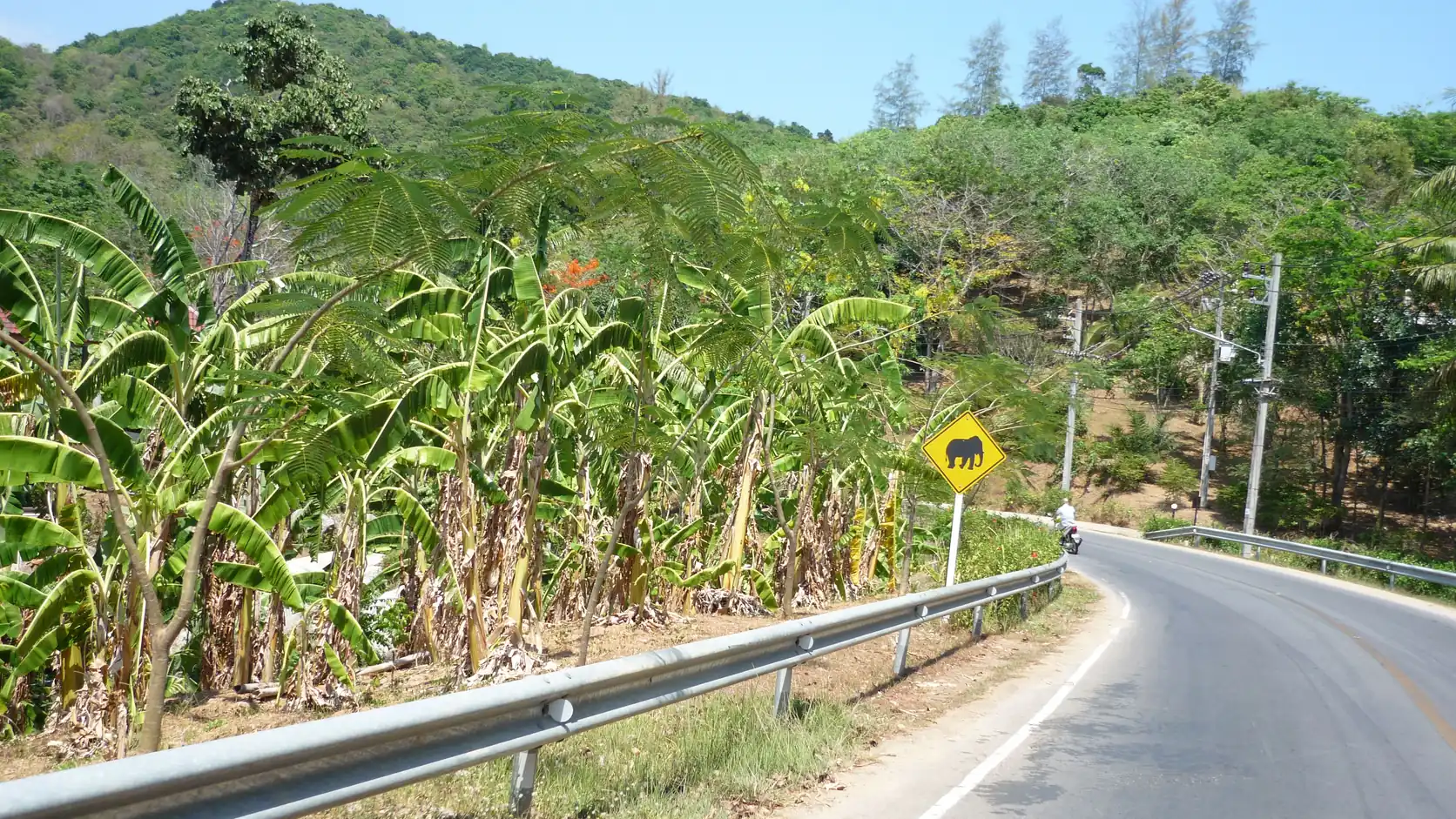
The road between Rawai and Kata. Photo by ADwarf, public domain, via Wikimedia Commons, cropped.
The UK government’s travel advice for Thailand says the country “has a high number of road traffic accidents, particularly with motorcycles”. It also notes that helmets are required by law and that scooters hired in tourist areas are often unregistered.
Sort out your licence before you drive. Visitors need an international driving licence, according to the Royal Thai Embassy in London, and residents can convert a foreign licence with documents that include a certificate of residence and a health certificate. Driving without a valid licence could invalidate your travel insurance.
Without your own vehicle, you rely on apps, taxis and buses. Grab lists Phuket as a service area, and Bolt has a Phuket city page. The Phuket Smart Bus Route 1 runs between the airport and Rawai via Patong, Karon and Kata. Before you choose a home, ride your daily routes at the times you would actually travel.
According to the developer’s brochure, Kata Beach is 0.9 km and Karon Beach 1.4 km from Ever Prime Residences. That is close enough for a swim before breakfast.
From May to October, though, the Tourism Authority of Thailand warns that Karon Beach may be affected by serious undertows because the bay is open. During the monsoon, Phuket authorities put up red flags and urge people to stay out of the water. The UK government adds that jellyfish can swim close to shore in the rainy season from May to October, and that their stings can be fatal.
Karon is also a tourist beach, with nightclubs, restaurants and evening entertainment along the beachfront road, according to TAT. For quiet evenings, check how far a home is from that strip.
Read Is Karon Beach safe? for the flag colours, rip-current escape steps and emergency numbers.
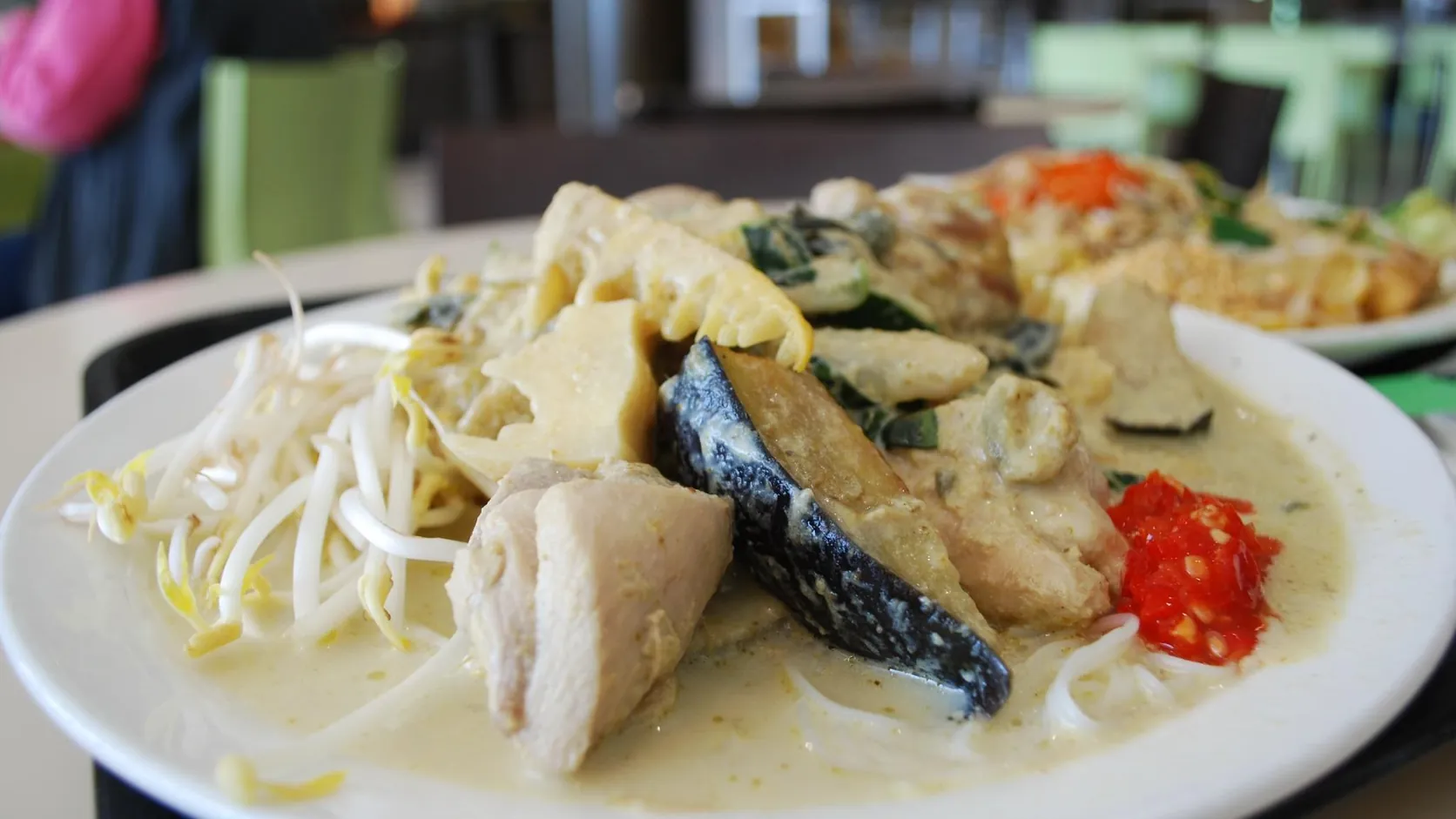
Khanom jeen with green curry. Photo by Alpha from Melbourne, Australia, CC BY-SA 2.0, via Wikimedia Commons, cropped.
Phuket has been a UNESCO Creative City of Gastronomy since 2015. TAT describes the local cooking, often called Baba Peranakan food, as a mix of several food cultures, and names dishes such as Mi Hokkien noodles and Mu Hong, pork belly stewed with herbs.
Our Karon night market guide covers the evening markets nearby, and the Phuket Vegetarian Festival guide explains the October festival. For restaurants and shopping, read our Karon Phuket area guide.
Living in Phuket can be cheap or expensive, and online budgets are built on someone else’s habits. Price healthcare first. Private hospitals can be expensive, so the cost of insurance shapes the whole budget.
If you earn or hold savings in another currency, your budget also moves with the baht. The Bank of Thailand publishes daily exchange rates. Your shopping bill depends on how much imported food and how many brands from home you buy.
Buyers should add ownership costs; our Karon condo CAM fee and ownership costs guide lists them. A practical test is a few weeks’ stay in the season you plan to live here, tracking what you actually spend.
Owning property in Thailand does not automatically give you a visa or the right to stay; our guide to Thailand visa rules for long stays in Phuket explains the options.
Foreigners can own qualifying condominium units within a foreign ownership quota, while land ownership is significantly restricted; our guide to foreign condo ownership in Thailand sets out the requirements.
Ever Prime Residences is planned on Patak Road in Karon. It is a low-rise project of four buildings with eight floors on about 6 rai of land.
Several facilities in the developer’s brochure answer the cons above:

Computer-generated image
Pros: warm weather, an international airport, 24-hour hospital emergency care and UNESCO-listed food culture. Cons: road safety, a long rainy season, rough seas from May to October and healthcare costs.
It can be, if you plan around school runs and beach safety. The developer’s brochure lists seven international schools within 17.8 km of Ever Prime Residences, the closest at 0.6 km. Teach children the beach flags before their first swim.
Not strictly, but life without one takes planning. Grab and Bolt both operate in Phuket, and the Smart Bus Route 1 links the airport with Karon. If you drive or ride, you need a valid licence and, on a motorcycle, a helmet.
The TMD dates it from mid-May to mid-October. September is the wettest month at the Phuket station.
It depends on your housing, healthcare cover, shopping habits and exchange rate. Private hospitals can be expensive, so insurance makes a big difference. A trial stay of a few weeks shows what you will really spend.
Living in Phuket suits people who want warm weather and a beach within reach, and who will plan for insurance, road safety and the monsoon. From Karon, two beaches, clinics and schools are close by.
If you are weighing a move and would like the Ever Prime Residences brochure, contact the Ever Prime Residences team.
All project specifications, facilities and distances are taken from the developer’s brochure and are subject to change without notice.
Image note: Photos are credited under each image. The pool image is from the Ever Prime Residences computer-generated renderings, not a photograph of the completed project.